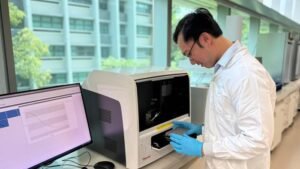
STEM (Science, Technology, Engineering, and Mathematics) has long been a male-dominated field, but women worldwide are breaking barriers and making groundbreaking contributions.
Despite these advancements, systemic challenges persist, limiting their access to opportunities, funding, and leadership roles. Societal norms, cultural biases, and workplace policies continue to shape the gender imbalance in STEM. Addressing these issues requires targeted efforts to create an inclusive and supportive environment for women.
A Scholarship Changing Lives
Recognizing the need for greater female representation in STEM, the British Council Women in STEM Scholarship was established to support women pursuing postgraduate STEM studies in the UK. Now in its fifth year, the scholarship has helped over 400 women since 2020, equipping them with the skills and knowledge to advance in their careers.

This initiative not only provides financial assistance but also fosters a network of empowered women who serve as role models for future generations. By investing in female talent, the scholarship contributes to a more diverse and innovative STEM workforce.
More information is available: https://www.britishcouncil.my/study-uk/women-in-STEM
The Gender Gap in STEM – Why Does It Persist?
Women remain underrepresented in STEM careers, a trend that is evident both globally and in Malaysia. While Malaysian universities produce a significant number of female STEM graduates, far fewer women enter or remain in STEM professions.
The reasons behind this disparity are multifaceted, stemming from deep-rooted societal expectations, workplace challenges, and barriers that hinder career and education progression. One of the key factors limiting women’s participation in STEM is the gendered perception of technical and scientific fields. From a young age, many girls are subtly discouraged from pursuing STEM subjects due to the stereotype that these disciplines are better suited for men.
This bias is reinforced by a lack of visible female role models in science and engineering, leading to lower confidence and aspirations among young women. Even when women do enter STEM, they often face “unconscious bias” in hiring and promotion, where men are perceived as more competent or better suited for leadership roles.
Workplace policies also contribute to the gender gap in STEM. Many STEM careers demand long hours, frequent travel, or unpredictable schedules, making it difficult for women who also manage family responsibilities. “A lack of flexible work arrangements, inadequate maternity leave policies, and insufficient childcare support” often force women to leave STEM professions or shift to less demanding roles. Moreover, women in STEM frequently encounter “gender discrimination, lack of mentorship, and fewer networking opportunities, further limiting their career growth”.
Women in STEM – The Malaysian Context
In Malaysia, the gender dynamics in STEM present a unique paradox. While women make up more than half of local STEM graduates, they are underrepresented in STEM-related jobs, particularly in engineering and technology sectors. Many female STEM graduates transition into teaching or administrative roles rather than continuing in technical fields. This trend highlights the need for better career pathways, stronger retention strategies, and workplace policies that support women in STEM professions.
Why Women in STEM Matter
Increasing female participation in STEM is not just about gender equality; it is a crucial driver of economic growth and innovation. Women also play a significant role in entrepreneurship and leadership in STEM-related businesses. Encouraging female participation in these fields fosters economic diversification, strengthens industries, and accelerates technological advancements. By investing in women’s education and careers in STEM, societies benefit from a more skilled workforce that can address global challenges, from climate change to healthcare innovations.
Women Who Defied the Odds
A prime example of a woman who has overcome barriers in STEM is “Astrophysicist Assoc. Prof. Dr. Nur Adlyka Ainul Annuar”, an expert in black hole research. A graduate of Universiti Kebangsaan Malaysia (UKM), she has made significant contributions to astrophysics, earning the “Merdeka Award for Outstanding Contribution to Science, Technology & Innovation” in 2021 at the age of 31.
Despite her success, her journey was not without challenges. As a mother balancing academic responsibilities and family life, she faced the difficult task of managing both personal and professional commitments.
With strong determination and a supportive network, she set clear boundaries and prioritized her goals, demonstrating that women can excel in STEM without compromising their personal lives. Her story serves as an inspiration to young women aspiring to enter the field, proving that resilience, support systems, and policy changes can make a difference in achieving gender equity in STEM.
Breaking Barriers for a Brighter Future
The road to gender equality in STEM is still long, but with initiatives like the “British Council Women in STEM Scholarship”, significant progress is being made. Encouraging women to enter and remain in STEM fields requires not just scholarships, but also “policy reforms, cultural shifts, and workplace support systems” that enable women to thrive.
By addressing gender biases, creating inclusive work environments, and showcasing role models, we can foster a STEM ecosystem where women have equal opportunities to innovate, lead, and contribute to scientific and technological advancements. The future of STEM depends on diversity, and ensuring that women play an integral role in shaping this future is not just a necessity—it is an imperative. •
NOTE: The Women in STEM Scholarships programme aims to increase opportunities in STEM for girls and women, to build a pathway to strengthen female leadership in Science and Innovation, and to promote a more diverse and gender-representative Science sector.
If you are a woman who is looking to take your science, engineering, technology or maths (STEM) career a stage further, find out more about the British Council’s Women in STEM Scholarships at www.britishcouncil.org/study-work-abroad/in-uk/scholarship-womenstem
If you are keen to position your organisation as a key factor in advancing gender equality in STEM and the HE sector, please reach out to the British Council to discuss partnership opportunities at MYKUL1Education@britishcouncil.org.