DR WU YUAN SENG stands at the forefront of cancer pharmacology, dedicating his career to unraveling the mysteries of two of the deadliest forms of cancers: esophageal and pancreatic.
With a profound commitment stemming from personal experiences and a robust academic background, Wu’s journey exemplifies the relentless pursuit of scientific breakthroughs in the fight against cancer.
His fascination with cancer research began during his undergraduate years, when he delved into the realm of natural products, exploring their potential anticancer properties. This initial foray sparked a passion in him, propelling him towards a Ph.D. in Cancer Pharmacology from the University of Malaya. Following this, he honed his area of specialisation through a research fellowship at Nottingham University, gaining more understanding of cancer biology and therapeutic interventions.
Driven by a personal connection to the plight of cancer patients, his Wu’s journey took him through various academic and research roles, including stints as a lecturer at institutions like MAHSA and Sunway University. His professional trajectory was deeply influenced by the prevalence of cancer in his community, with close encounters with the disease among family and friends propelling him to seek for urgent effective treatments.

Wu’s current research focuses on esophageal and pancreatic cancer, two silent killers that pose significant challenges due to their asymptomatic nature in the early stages.
Armed with a deep understanding of molecular pharmacology and therapeutic interventions, Wu embarked on a mission to discover new biomarkers using RNA sequencing, particularly focusing on whole transcriptome analysis. His emphasis lies on investigating long noncoding RNAs and miRNAs for their potential as diagnostic
indicators and therapeutic targets in these cancers.
Securing two grants dedicated explicitly to esophageal and pancreatic cancer research, he set out to unravel the intricate molecular pathways underlying these diseases. His research endeavours are fuelled by a sense of urgency, recognising the pressing need to address the rising incidence of these cancers, particularly in Southeast Asian countries.
He told The Petri Dish: “The prevalence of esophageal and pancreatic cancers in the region is alarming.
Quoting the latest Global Cancer Observatory (GLOBOCAN) data, Wu said esophageal cancer ranks 17th worldwide in terms of incidence, with an estimated 604,100 new cases reported in 2020 alone.
He said: “In Southeast Asia, esophageal cancer is of particular concern, ranking 9th among all cancers, with an incidence rate of 13.1 per 100,000 individuals. Similarly, pancreatic cancer ranks 19th globally, with an estimated 495,773 new cases reported in 2020. In Southeast Asia, although pancreatic cancer is less prevalent globally, it remains a significant health burden, further underscoring the urgency for more in-depth research.”
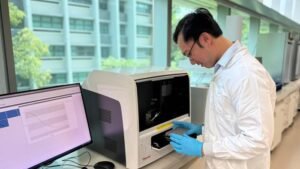
Wu and his team use cutting-edge techniques, such as RNA sequencing (specifically whole transcriptomic analysis) focusing on long noncoding RNAs and miRNAs,
His team identifies novel biomarkers crucial for early detection and intervention in these deadly diseases. This method allows them to delve deep into the molecular landscape of cancer, unravelling intricate pathways and deciphering the genetic signatures of tumours.
Through meticulous analysis and interpretation of sequencing data, Wu and his team strive to develop robust diagnostic assays that enable personalised treatment strategies and improve outcomes for patients with pancreatic and esophageal cancer.
His dedication to addressing the pressing challenges in cancer research is further amplified by his recent fellowship experience at the Clinical Omics Institute in Korea.
“During this immersive period, I delved into the application of artificial intelligence (AI) in cancer diagnosis and treatment, gaining invaluable insights into leveraging AI tools for analysing RNA and DNA sequencing data not only from cancer cells but also from other diseases.
“These cross-disciplinary training positions have helped me with the expertise needed to confront the complex landscape of cancer in the region, highlighting the necessity for innovative approaches like AI to enhance patient outcomes and alleviate the burden of these diseases,” he said.
He also underscored the significance of AI in molecular pharmacology and therapeutics, emphasising its pivotal role as a research tool. He emphasizes the crucial role of AI, particularly in RNA/DNA sequencing, in identifying genes and proteins that could serve as diagnostic, prognostic, or treatment biomarkers across diverse diseases.
Wu is confident that in the forthcoming years, advancements in next-generation sequencing will enhance efficiency in pinpointing potential biomarkers while simultaneously reducing sequencing costs, rendering this technology more accessible to both scientists and clinicians.