Researchers from the Antimicrobial Resistance (AMR) Interdisciplinary Research Group (IRG) at Singapore-MIT Alliance for Research and Technology (SMART) have discovered a link between the malaria parasites’ ability to develop resistance to antimalarial drugs – specifically artemisinin (ART) – through a cellular process called transfer Ribonucleic acid (tRNA) modification.
In collaboration with MIT’s research enterprise in Singapore, Massachusetts Institute of Technology (MIT), Columbia University Irving Medical Center (CUIMC), and Nanyang Technological University, Singapore (NTU Singapore), the breakthrough was made possible.
tRNA modification is a mechanism that allows cells to respond rapidly to stress by altering RNA molecules within a cell. This groundbreaking discovery advances our understanding of how malaria parasites respond to drug-induced stress and develop resistance, paving the way for the development of new drugs to combat resistance. Malaria is a mosquito-borne disease that afflicted 249 million people and caused 608,000 deaths globally in 2022.
ART-based combination therapies, which combine ART derivatives with a partner drug, are first-line treatments for patients with uncomplicated malaria. However, Plasmodium falciparum (P. falciparum), the deadliest species of Plasmodium that causes malaria in humans, is developing partial resistance to ART. This partial resistance is widespread across Southeast Asia and has now been detected in Africa.
In a paper titled “tRNA modification reprogramming contributes to artemisinin resistance in Plasmodium falciparum,” published in the scientific journal Nature Microbiology, the researchers documented a novel discovery: a change in a single tRNA, a small RNA molecule involved in translating genetic information from RNA to protein, provides the malaria parasite with the ability to overcome drug stress.

The study describes how tRNA modification can alter the parasite’s response to ART and help it survive ART-induced stress by changing its protein expression profile, making the parasite more resistant to the drug. ART partial resistance causes a delay in the eradication of malaria parasites following treatment with ART-based combination therapies, making these therapies less effective and susceptible to treatment failure.
“Malaria’s growing drug resistance to artemisinin, the current last-line antimalarial drug, is a global crisis that demands new strategies and therapeutics,” said Jennifer L. Small-Saunders, Assistant Professor of Medicine in the Division of Infectious Diseases at CUIMC and first author of the paper. “The mechanisms behind this resistance are complex and multifaceted, but our study reveals a critical link. We found that the parasite’s ability to survive a lethal dose of artemisinin is linked to the downregulation of a specific tRNA modification. This discovery paves the way for new strategies to combat this growing global threat.”
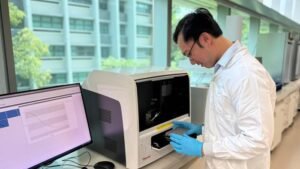
The researchers investigated the role of epitranscriptomics—the study of RNA modifications within a cell—in influencing drug resistance in malaria by leveraging advanced technology and techniques for epitranscriptomic analysis developed at SMART. This involves isolating the RNA of interest, tRNA, and using mass spectrometry to identify the different modifications present. They isolated and compared drug-sensitive and drug-resistant malaria parasites, some of which were treated with ART and others left untreated as controls.
The analysis revealed changes in the tRNA modifications of drug-resistant parasites, and these modifications were linked to the increased or decreased translation of specific genes in the parasites. The altered translation process was found to be the underlying mechanism for the observed increase in drug resistance.
This discovery also expands our understanding of how microbes and cancer cells exploit the normal function of RNA modifications to thwart the toxic effects of drugs and other therapeutics.
Understanding the Mechanism Behind Malaria Drug Resistance
Researchers have identified a key mechanism that allows malaria parasites to develop resistance to antimalarial drugs, specifically artemisinin (ART). This breakthrough discovery could lead to the development of new strategies to combat this growing global threat.
The study found that a change in a single tRNA molecule, a small to ART, helping it survive ART-induced stress and become more resistant to the drug.
The researchers investigated the role of epitranscriptomics, the study of RNA modifications within a cell, in influencing drug resistance in malaria. By analyzing the RNA of drug-resistant and drug-sensitive parasites, they discovered changes in tRNA modifications that were linked to altered gene translation and increased drug resistance.
This discovery expands our understanding of how microbes and cancer cells can exploit RNA modifications to evade the effects of drugs, opening up new possibilities for developing targeted therapies.