Bacteria found by Malaysian expedition team has cancer fighting potential
BY DR CHEAH YOKE KQUEEN
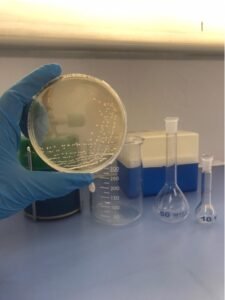
SERDANG: A new microbe discovered during an expedition to the polar region of Antarctica in November 2007 by a Malaysian research team can produce a compound that is active against pathogens and cancer cells, in particular colorectal and breast cancer markers.
The bacterium, named Barrientosiimonas humi, was found in the soil on Barrientos Island. Research done on this new genus of bacterium was published in the International Journal of Systematic and Evolutionary Microbiology in 2013.
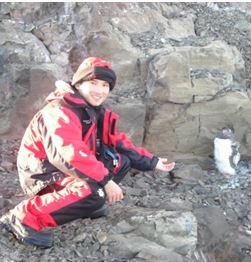
Barrientos, in the Aitcho Island group in Antarctica, stands out as the only island inhabited by penguins and seals. The excrement of these animals provides organic matter to sustain microbes or bacteria.
With an average temperature of around minus 20 degree Celcius, ice forms covering the top soil in Barrientos Island. The frozen ice preserves millions of micro-organisms in the soil.

“The presence of organic matter coupled with the climate creates the prime condition for uncontaminated or pure samples of living microbes,” said Assoc Prof Dr Cheah Yoke Kqueen, a Molecular Biologist from Universiti Putra Malaysia.
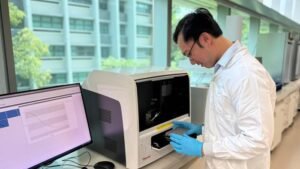
From the microbe samples collected in the expedition, Cheah and his research team have identified several novel bacteria.
One of these has been successfully named after the island on which it was discovered – Barrientosiimonas humi, or BH.
Cheah said: “BH is a not only a new genus discovery, but what makes it important is that it can produce an identified compound active in targeting cancerous cells in human colon and breast, and bacterial infections. Both the bacterium and compound are novel. They have not been described before, hence, they are new discoveries in molecular biology”.
“Currently, the identified compound (to be named later) has already been tested in vitro and tested in vivo (mice). The next course would be to test in higher animals, such as dogs, before moving on to testing in human clinical trials,” said Cheah.
The BH sample was collected during the XI Ecuadorian Antarctic Expedition 2007, stationed at Pedro Vicente Maldonado Research Station on Greenwich Island, Antarctica. Cheah was part of a five-man Malaysian team together with scientists from Ecuador and United Kingdom on the expedition.
The XI Ecuadorian Antarctic Expedition and the BH project were funded by Yayasan Penyelidikan Antartica Sultan Mizan (YPASM), Malaysia Antarctic Research Programme (MARP) and Instituto Antartico Ecuadoriano (INAE), while Universiti Putra Malaysia (UPM) provided laboratory facilities.