BY JOTISRI VASUDEVAN
IN THE ever-evolving field of biotechnology, the emergence of postbiotics as a groundbreaking concept has paved the way for innovative health solutions through research.
Driven by a passion for research and a desire to contribute to society, Associate Professor Dr Tan Joo Shun who is a lecturer at the School of Industrial Technology, Universiti Sains Malaysia (USM) spoke to The Petri Dish on the remarkable journey that led him to become the founder of Biotenova, a spin-off company specialising in probiotic and postbiotic products with novel ingredients.
Tan provided a simplistic analogue: “Probiotic is like a bee, prebiotic is like nectar, and postbiotic is like honey. Bee (probiotic) will go and collect nectar (prebiotic), which they will then use to produce honey (postbiotic).”
He breaks down the differences between the three “biotics: “Probiotics are living microorganisms that contribute to gut health when consumed. Prebiotics are non-living fibres that serve as a food source for probiotics, promoting a healthy gut environment. Postbiotics, on the other hand, are the non-living probiotic microorganisms and their byproducts that consist of cell components and metabolites which go beyond prebiotic and probiotic.”

From Probiotics to Postbiotics
Tan’s research initially focused on vaccine research and development using fermentation technology. His interest gradually shifted toward lactic acid bacteria fermentation when Tan realised the immense potential of probiotics to enhance human health, which laid the foundation of his postbiotic works later.
“While directing efforts towards studying the metabolites produced by probiotics, I recognised that probiotics are not stable, have a short shelf life and the uncertainties of their survival through the digestive system,” he contrasted the limitations.
“Since my expertise in fermentation technology, I kept studying a lot with probiotic strains and found that the postbiotics from Lactobacillus can inhibit the growth of harmful bacteria. So, if we consume it, we can suppress pathogenic bacteria in our gut,” he beamed.
“Postbiotics may have similar health benefits to probiotics but it’s more stable than probiotics. This is because postbiotics are non-living microorganisms and already dead cells whereas probiotics are living microorganisms,” he said.
This shows a clear distinction between probiotics and postbiotics when International Scientific Association for Probiotics and Prebiotics (ISAPP) defines postbiotics in 2021 as a preparation of “non-living microorganisms” and/or their components that confers a health benefit on the host.
“We have tested postbiotics with different temperatures, up to 121°C, and all activities have remained stable. As a result, postbiotics can be used in a variety of applications that involve heat treatment and can be formulated to adapt, including the production of ready-to-consume food and drink,” said Tan.
A Gateway to Postbiotics
This ingenious approach through studies gave birth to postbiotic innovation like a skincare product that won the prestigious gold medal at Malaysia Technology Expo (MTE) 2023. The accolade highlights the transformative potential of postbiotics with their ability to inhibit secondary infections associated with conditions like eczema through skincare products.
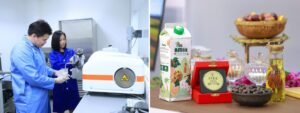
He expressed the novelty and promising nature of postbiotics, stating, “All these ideas during research and innovation made me realise that postbiotic research is something new and encouraged me to explore the opportunity by applying for a spin-off company, Biotenova with postbiotics as one of the flagship products. We have a joint venture with BioScenergy International (BSI) to support and commercialise our postbiotics.”
The journey of Biotenova in harnessing the power of postbiotics begins with modern fermentation techniques.
“Using bioreactors, we start with small cultures that are then scaled up to larger fermenters. Through careful optimisation of bioprocess parameters such as aeration, dissolved oxygen levels, agitation speed, and pH, the probiotic cells can produce the desired metabolites,” he explained.
“Monitoring and controlling these parameters ensure optimal conditions for production. Once fermentation is complete, heat inactivation of probiotics is conducted to obtain postbiotics, and the postbiotic solution is concentrated using membrane filtration. The final step involves spray drying to obtain the postbiotic product in a convenient form,” he aligned the method of implementation.
Compared to other products in the market, postbiotics offer unique advantages that became the reason for clinching awards.
Notably, Tan’s postbiotics have proven to possess exceptional antimicrobial properties, specifically against multidrug-resistant bacteria like methicillin-resistant Staphylococcus aureus (MRSA). These postbiotics successfully inhibit MRSA, a bacteria notorious for resisting antibiotics.
“Furthermore, it ensures a more sustainable approach not only to combating harmful bacteria but also fungi,” he added.
Under the trademark name Lassica K014, Tan’s team isolated a Lactobacillus strain from Sauerkraut, which serves as the primary source of their postbiotic products. The postbiotics from this unique strain has demonstrated significant potential in health by inhibiting polymicrobial growth and promoting the growth of beneficial microbial strains of lactic acid bacteria in guts. Lassica K014, apart from its excellent antimicrobial properties, has demonstrated additional beneficial attributes such as antioxidant and anti-inflammatory activities.
A Glimpse into the Future
Tan’s vision for the future of postbiotics involves further research, including pre-clinical and clinical studies, to gather more evidence on their advantages for human health.
“Additionally, efforts are underway to lobby for the recognition and listing of postbiotics by regulatory agencies, such as the National Pharmaceutical Regulatory Agency (NPRA)” he said.
His path from a young PhD student to the founder of Biotenova showcases the transformative power of postbiotics research, innovation, and a commitment to societal well-being. It also serves as an inspiration to budding biotech enthusiasts, emphasising the importance of exploring one’s interests and creating opportunities.
As Tan expressed, Biotechnology holds immense potential: “It offers a path to becoming not just job seekers but job creators.”