BY JOTISRI VASUDEVAN
The world population is projected to reach 9.8 billion in 2050 according to the United Nations.
As the global population continues to grow, the demand for food resources, particularly proteins, is reaching unprecedented levels. Traditional methods such as dairy farming and livestock rearing pose significant challenges in terms of resource consumption, environmental impact, and food security.
In response to these challenges, emerging technologies like precision fermentation and protein modification have gained attention as viable solutions to produce sustainable alternative protein sources.
We are aware that non-animal sources of protein, such as soy and grains, have long been a mainstay of traditional diets. However, there are other types of alternative proteins that are making new horizons in the food world.

This type of alternative protein can be created using technologies such as precision fermentation, insect or plant-based protein extraction, and cell-cultured meat production rather than being derived from animals. It provides us with wholesome food without having to rely on animals.
This is specifically what, Arjun Asogan and Dr Tan Thuan Chew shared with The Petri Dish. They lent their viewpoints by delving into the potential of alternative proteins through technologies in shaping the future of food.
The Key to Authentic Alternative Protein
Arjun, the founder of ATT Integrasi Agro Farm and Nutriche Enterprise said: “Precision fermentation is an emerging technology that tailors microorganisms, instructing them to produce alternative proteins that have the same composition as those found in real animals.”
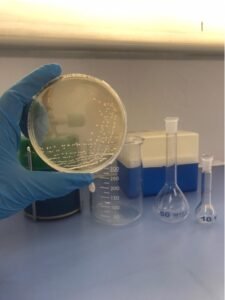
“These microorganisms are simply placed in a medium of fats, sugars, minerals, and vitamins and while fermenting, they can brew an array of ingredients, such as animal proteins to produce alternative protein products such as artificial milk. All of this occurs without the use of any actual animals but mimicking the natural processes that occur in animals,” he added.
Arjun acknowledged: “We currently do not produce raw materials like milk through precision fermentation in our company because it is more challenging than we think in terms of the cost of technology. Instead, we plan to embrace and buy products derived from this technology to improve the quality and sustainability of their offerings.”
“Producing one kilo of ghee, a product by Nutriche Enterprise, currently requires a staggering 25 litres of milk with a mere 4% fat content. This process is clearly unsustainable for the continuous production of ghee as our reliance on fats remains significant.”
“Sometimes the quality of milk from cows fluctuates, leading to inconsistencies in the final products,” said Arjun.
“To address these challenges, our focus has shifted towards alternative milk through precision fermentation because the quality is standardised. By embracing this advantage, we aim to become avid consumers of precision-fermented milk, ensuring a reliable source of high-quality ingredients for our products,” he continued.
“Precision fermentation offers a sustainable solution by reducing the environmental impact of dairy farming, such as methane emissions, water, and land usage,” he emphasised.
“Through traditional dairy farming, 37% of the total methane is from cows and sheep. To produce one litre of milk requires a staggering 600 litres of water. To sustain just 20 cows, a vast expanse of 15 acres of land, equivalent to the size of a football field, is required. So, it is really tempting for nature,” he added.
Therefore, technological approaches to producing alternative proteins are needed to mitigate the strain on nature and ensure a sustainable future.
Arjun predicts that precision fermentation will disrupt traditional dairy farming practices and become a key player in the alternative protein market as this approach has already gained traction globally.
A Path to Food Security and Sustainability

The role of alternative proteins in enhancing food security is noteworthy.
“Alternative proteins like insect-based proteins can be produced on a small scale, making them suitable for local production and reducing reliance on imports that ensure a more secure food supply,” said Tan, an expert in food processing and alternative proteins.
According to the senior lecturer at Universiti Sains Malaysia, insects are highly resilient and can be reared in various conditions, offering a valuable protein source, particularly in regions with limited agricultural resources.
“It also contributes to environmental sustainability where insect farming produces fewer greenhouse gas emissions, requires less water, and contributes to reduced deforestation,” said Tan.
“Similarly, plant-based proteins have a smaller ecological footprint, requiring less land and water than animal agriculture,” he continued.
He perceives those technological advancements, including cellular agriculture and protein modification techniques, will enhance the quality, taste, and affordability of alternative proteins, leading to greater consumer acceptance.
“Governments worldwide are recognising the significance of alternative proteins in addressing sustainability, food security, and public health concerns. As a result, regulatory frameworks are evolving to accommodate this growing industry, ensuring consumer confidence, and facilitating market growth,” he highlighted.
Tan expressed: “It is understandable that alternative proteins like cultured meats, may be new and unfamiliar to many consumers. It is natural to have questions and concerns about their safety.”
“Fortunately, alternative proteins are backed by scientific research, regulatory oversight, and the commitment of governments and manufacturers to ensure that they are safe to consume,” he added.