AS the world’s population continues to grow and arable land becomes increasingly scarce, there is a pressing need to enhance the efficiency of food production. At the same time, climate change is wreaking havoc on our planet’s ecosystems, making it increasingly difficult to grow crops in many regions. But Selangor-born scientist, Dr Najiah Mohd Sadali is determined to find a solution to these challenges.
In the past, Najiah has collaborated with her team at the University of Oxford to successfully control the rate of ripening of tomatoes through the regulation of a gene called SP1. This technology was patented in 2014 and shows high potential to develop early and late-ripening varieties of fleshy fruits through either upregulation or downregulation of the gene without compromising the quality of the ripe fruit.
In an exclusive interview, Najiah said that she was excited about the potential impact of the research. “For example, early ripening enables home growers to harvest and enjoy the fruits much faster. A more important application will be to reduce food wastage by slowing the spoilage to increase transportability,” she explained.
According to the World Resources Institute (WRI), an estimated 10-15% of food loss and waste in high-income countries is due to logistical issues, while in low-income countries, this figure can be much higher, reaching up to 50%.
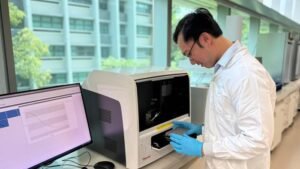
Najiah is currently a researcher at the Centre for Research in Biotechnology for Agriculture (CEBAR), Universiti Malaya and is working on adapting her research to increase the yield of palm oil per hectare in the palm oil industry which is a crucial sector for the Malaysian economy.

Najiah emphasised the urgent need for genetically modified (GM) crops to be commercialised to ensure sustainable development, food security and combat the effects of climate change. However, she acknowledged the challenges of public perception and political will that remain a major obstacle to progress in this field.
“In any situation, we would opt to choose the lesser of the evil. Some have negative perceptions about the side effects of GM, but if it is proven to be able to benefit billions of people, especially those dying from hunger, why must we limit ourselves,” she asked.
Despite these obstacles, Najiah encourages more scientists to work on GM research and is optimistic about Malaysia’s potential.
“Even though Malaysia has not commercialised any GM crops yet, on the bright side I would say we are up to par with other countries when it comes to our research standards and collaborations”.
According to Najiah, Malaysia is gearing up towards benefitting from GM technology and is expected to move the needle in commercialisation within the next 10 to 20 years. She advises researchers who are eager to pursue GM research to not limit themselves to present circumstances but to look into how their research can be patented to reap benefits in the future and in the broader global context.
As a local scientist, Najiah’s work serves as an inspiration to others in the field. She strongly believes that understanding the underlying genetic mechanisms of crops will be highly essential to develop new strategies to contribute to a sustainable future. As Najiah says: “The possibilities are endless!”