BY VIRMAN JURI
ANNUALLY, seven billion male chicks are being culled worldwide. Male layer chickens do not have commercial or economical value for hatcheries in contrast to female layer chickens that lay eggs. This fact raises a glaring concern in the poultry industry in matters pertaining to animal welfare.
Furthermore in Malaysia, food security issues have constantly hit the headlines with consumers frustrated with acute egg shortages and the ensuing increase in egg prices.
In November last year, Malaysia saw a shortage of 157 million eggs and this has led the current government to import eggs from India.
“It is time to strike a balance between food security and animal welfare,” urged Professor Datuk Dr Zulkifli Idrus who is the Deputy Vice-Chancellor of Research and Innovation at Universiti Putra Malaysia (UPM).

“Chick culling” is the process of slaughtering the surplus of newborn chicks, especially male ones through conventional methods of mechanical or gas killing.
To provide a brief overview of chicken culling, Zulkifli recently told The Petri Dish there are two types of chickens produced for consumption – the broiler chickens and layer chickens. Both are genetically different as layer chickens are used for egg production.
“Male layer chicks have no economic value for hatcheries. They are not suited for meat production because they grow very slowly and consume a lot of space, energy, and money, so they are not economically remunerative. Hence they are culled at just a few days old.”
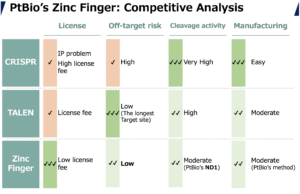
Recent cross-cutting research has provided a solution to stop chick culling. CRISPR technology is used to help detect the chicks’ gender status at an embryonic level before being incubated for subsequent development. This procedure is called sex sorting or “in-ovo sexing”.
Zulkifli said: “Due to a growing demand for ethical eggs in Europe, more emerging technologies are looking into ways to reduce chick culling. The most advanced approach is through using CRISPR which promises speed in identifying gender status.”
One example of such technology was developed by eggXYt, an Israeli agrotechnology start-up company.
With CRISPR, they make edits to the genes of the male chicken by inserting biomarkers into the chickens’ chromosomes so it produces sex-detectable eggs. As the biomarker is only found in male chicks, it can be detected by a scanner, and the eggs are separated from the female ones for other usage.
This technology can solve the issue of chicken culling and save a lot of costs by no longer having to incubate the male chicks.
“However, the technology is nowhere near its full application yet as there are still loopholes and questions that need to be addressed such as the impact of gene editing on the hatchability and fertility of the chicken that is not fully described yet. Further research is needed before the poultry industry can adapt to the new technology,” said the researcher.
On another note, Zulkilfi said that Malaysians still lack awareness regarding animal welfare issues.
“Many have the perception that farm animals are supposed to be slaughtered, so we should not pity them. This thought is simply wrong because farm animals can still feel pain and to say we should not be bothered about their well-being is wrong too.”
“We need more awareness to educate the public on the welfare of farm animals, especially those that live in the city as they are not exposed to how farm animals are being raised,” added Zulkifli