BY Ts. DR MAHALETCHUMY ARUJANAN & SAARANI VENGADESEN
WILL working tirelessly in the laboratories result in GM crops being released into the hands of farmers, subsequently relieving their world from grappling with food insecurity?
It is time for scientists to understand the invisible hands that move the needles when it comes to the approval and adoption of GM crops.
ISAAA Inc and the Malaysian Biotechnology Information Centre (MABIC) have been convening Asian scientists for the past five years to empower them to play an active role in international negotiations to add voices of reason and science.
Named ASCA short for Asian Short Course on Agribiotechnology, Biosafety and Communication, this workshop has engaged more than 100 Asian scientists, policymakers and industry players since 2018.

This year ASCA returned to its usual physical mode in Manila from 7-11 Nov, with 25 delegates from Asian countries. With COP15-MOP10 around the corner, the delegates were also exposed to the current trending agenda of the Convention on Biological Diversity (CBD).
Participants saw the link between their work in the laboratories, and ministries and agencies with international conventions and protocols. The goal was for scientists and policymakers to play an active role in regulations and policies at the national and international levels.
The need for the latest tools in crop breeding such as gene editing was demonstrated with an overview of the history of crop evolution. Current global developments in policies related to gene editing were also represented. It was enlightening to see how countries such as the Philippines, Australia, India, USA, Canada, Japan, Argentina and Brazil are becoming leaders driven by strong science in their policies. Many Southeast Asian countries like Thailand, Malaysia, Indonesia and Vietnam are still undecided on their direction or in the process of consultation.
This year’s ASCA participants made up of scientists, policymakers, regulators and lawyers were also taken on field tours to the International Rice Research Centre (IRRI), the University Philippines Los Banos’ Institute of Plant Breeding, PhilRice, Livestock and Aquaculture research centres to have first-hand exposure to current research initiatives in improving crops, livestock and fishes to support food security.
The highlight of this short course was a visit to the GM Golden Rice field where delegates were given an opportunity to taste the rice. The Philippines is the first country to receive approval for commercial farming of Golden Rice. It took 25 years for the much-awaited rice to hit the dining table due to strong opposition from activists which delayed the approval process.
At the Livestock Biotech Centre participants saw cryogenic facilities where livestock genetic materials and various breeding techniques were used to improve carabao. Carabao is an important animal in Filipino culture where it is used to till the farms and is a source of milk.
All roads lead to Montreal: COP15-MOP10
The PRE-COP15-MOP10 session covered various agendas under the CBD and Cartagena Protocol on Biosafety such as Post 2020 Global Biodiversity Framework (GBF), Biosafety Clearing House, Risk Assessment and Management, synthetic biology, and liability and redress.
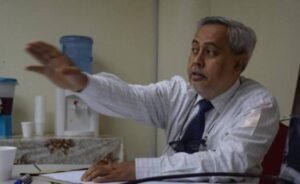
Marianela Araya Quesada, Programme Management Officer on Risk Assessment of LMO gave an overview of the main agendas of COP-MOP 10. She highlighted that specific programmes of work on the detection and identification of LMOs are going to be discussed for the first time in COP. Speaking about liability and redress, Dr Piet van der Meer reminded regulators not to ask for information that they do not know what to do with. “This information will not help you to determine the safety of GM crops and will only make it very difficult for scientists to proceed with commercialising their products”, he said.
Synthetic biology and gene drive were also discussed in the workshop as it is garnering a lot of attention among the scientific community. “There is still no internationally agreed definition for synthetic biology. It is still being determined if synthetic biology qualifies as a newly emerging issue and discussions will take place at COP,” said Dr Felicity Keiper, Expert in Global Regulatory Affairs in the Seeds & Traits, BASF.
It is a well-known fact that science is always ahead of regulations. But this is not the case for the Philippines. Participants from the Philippines said their policies for gene editing are future-proofed and way ahead of time. “We are just waiting for applications,” said one regulator.
Biodiplomacy
ASCA5 introduced diplomacy skills to the participants through a role-playing game where they negotiated their positions on Post 2020 GBF’s Target 17. Muhammad Adeel, a science diplomat in Pakistan explained the positions which are permissive, precautionary, promotional, and preventive.
Parties were asked to negotiate among themselves to gain blocks in support of their position to get an insight into how negotiations take place in COPMOP meetings.
Communicating science is a crucial step in the regulation process as scientists, regulators, media, private companies and farmers come together in framing the debate, shaping policy and influence public opinion in understanding a certain technology.
Mahaletchumy pointed out a few major challenges when it comes to science communication such as lack of funding, institutional support and difficulties in translating technical terms to layman’s language as scientists are not trained in communicating science.
Before wrapping up the workshop, Dr Firdaus who is a lawyer by profession expressed his view that;
“This short course was very fruitful as science diplomacy plays a crucial role in the decision-making process of science-based policies. Generally, the awareness is still low and more work needs to be done in Malaysia,” said the Malaysian participant.