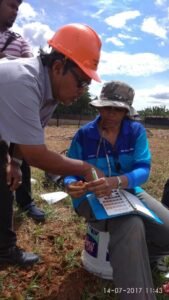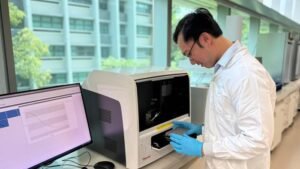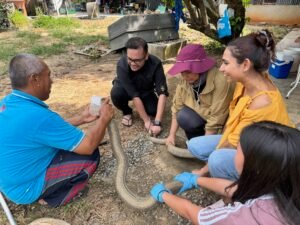
“IT takes close to 200 years to form one cm of soil in the tropics and the process is even slower in the temperate regions,” says Dr Jeyanny Vijayanathan, a soil scientist at Forest Research Institute Malaysia (FRIM).
Jeyanny who advocates environmental awareness says: “We cannot reverse soil erosion that is happening for centuries now, but the current generation should be taught to respect the ground that they step on from a young and to use it sustainably.”
Why is this dead organic matter an important natural resource? Soil is under threat like never before due to human interventions such as agriculture, mining, waste disposal and other anthropogenic activities. Soil erosion and pollution are major threats to soil health, and these have a profound impact on food production. This makes agriculture both the cause and victim of soil erosion and pollution.
Jeyanny says sustainability is the way forward.
“With the increasing global population and demand for food and space to live, the world is witnessing a drastic change in land use. The onus is on us to form and strengthen strategic partnerships towards sustainable soil management today and beyond.”

Saving soils is a long-term commitment for everyone, she says.
Soil erosion
“Loss of vegetation cover; improper land management practices; as well as climatic conditions that exacerbate heavy rainfall are the causes of soil erosion,” explains Jeyanny.
She also says certain topographic features such as steep terrain with more than 20°elevation with sandy soil texture are at greater danger.
Soil erosion is an environmental catastrophe. It needs urgent remedial attention as there is already limited arable land for food production. Food security is under threat thanks to the many crises the world is facing.
“Agriculture is inevitable and there are no ways to reduce it given the growing global population, demand that increases in tandem with development and prosperity, and the competition between food and non-food products from agriculture.”
In order to save soil, Jeyanny says there must be concerted efforts between many different stakeholders.
“For example, in a forest, maintaining tree cover or planting trees or fast-growing species which are able to have deep roots or abundant root networks to stabilise the soil will help.
In Malaysia some of the common strategies are planting cover crops, shrubs and loose crown trees, mulching and other measures such as terracing or using geotextiles on steepland,” says Jeyanny calling for the need to conserve soil health.
When asked what soil health is, the soil scientist has this to say.
“Soil health is defined as the continued capacity of soil to function as a vital living ecosystem that sustains plants, animals, and humans.”
The first step to saving soil is enriching the soil surface with vegetation to kick start the process of the nutrient cycle.
“Soil microbes such as Arbuscular mycorrhizas and other nitrogen-fixing bacteria need roots as their hosts to take part in nutrient assimilation.”
Besides this, the leaf litter on the soil surface is usually broken down by microfauna to smaller pieces that help nutrient uptake, particularly nitrogen and carbon. The debris on the soil surface assists to retain soil moisture and also facilitates root respiration. Established vegetation via nutrient cycle does not only provide ground cover for stability but also acts as carbon sinks, food for faunal communities, and regulates microsite temperature. These are all part of climate regulation.
Is enough being done?
Jeyanny says to save soil needs a continuous effort. It should not cease. Her own institute, FRIM has provided many technical and consultation services in soil conservation, and rehabilitation restoration strategies, particularly in vulnerable ecosystems such as coastal plains, peat swamp forests, inland forests, montane forests, and degraded land which are prone to landslides and land degradation.
Besides FRIM, other institutes such as the Department of Irrigation and Drainage have provided guidelines for managing slopes with research and development methods whereas the Department of Agriculture published methods on agricultural production on steep land.
Some NGOs such as the Malaysian Society of Soil Science, the Geological Society of Malaysia, and others have constantly highlighted the need for judicious uses of soil resources and advocated sustainability in seminars, talks, and workshops locally and internationally.
Food and Agriculture Organization (FAO) has also marked December 5th as World Soil Day. FAO via its Global Soil Partnership Network involves the commitment of different countries in creating awareness, strong interactive partnership, enhanced collaboration and synergy of efforts between all global stakeholders. Jeyanny is also a member of the Intergovernmental Technical Panel on Soils representing the Asean region from 2022 to 2025.
The outcome
According to Jeyanny, the activities by national and regional organisations create awareness that soil is a finite resource that requires sustainable management. She says this, citing the recent government campaign “Greening Malaysia: Our Trees, Our Life” by the Ministry of Energy and Natural Resources.”
This campaign, she explains promotes planting 100 million trees from 2021 to 2025 with the involvement of various governmental and non-governmental organisations with the objective of promoting the conservation and rehabilitation of green lungs. Indirectly, the campaign also protects soil and enhances soil health.
When asked, if there is enough “know-how” on saving soil among farmers, government, industry, and other stakeholders, Jeyanny admits that most information is contained in either in published articles, books, or reports.
She says it is necessary that these ‘know-hows’ are translated into effective science communication tools such as public forums, online references, social media, workshops, dialogues, and other means that reach the targeted stakeholders.