The Biosafety Department under the Ministry of Natural Resources and Environment is expected to introduce ten standard operating procedures (SOPs) to detect living modified organisms (LMOs) in the country under its enforcement activities in the next four months.
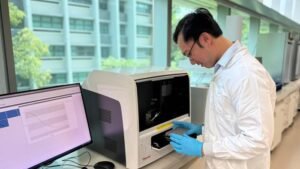
Its minister, Datuk Seri Wan Junaidi Tuanku Jaafar (pix)announced this during the National Biosafety Seminar which aims to create awareness on biosafety and the role played by various stakeholders to implement the National Biosafety Act 2007.
To implement the SOPs, the department will introduce sampling procedures for LMO products. There is also a need for the department to work closely with the Ministry of Agriculture and Agro-based Industry and other relevant ministries said the minister.
The Ministry of Natural Resources and Environment will also work with the Attorney-General’s Chambers to implement the Biosafety Act.
The seminar was attended by enforcement officers from various ports of entry as they will be empowered to monitor LMOs and enforce the Biosafety Act.

The minister said, “The SOPs will ensure that the food safety of the country is protected.” However, to a question on the safety of LMOs already in the market, the minister said, “LMOs that are approved by the department are safe for consumption and the public do not have to worry about them.”
He also said the possibilities are there for unapproved LMOs to end up in the market due to co-mingling of LMOs and non-LMOs in the farms and supply chain and enforcement is required to monitor this.
True to the name, the seminar provided information on modern crop biotechnology and the regulations relevant to its research, commercialisation and trade. According to Dr Mohamed Shafit Hussain from the Malaysian Agricultural Research & Development Institute (Mardi), about eight universities conducted research on GM crops and the research institutes involved are Mardi, Malaysian Palm Oil Board, Malaysian Cocoa Board, Malaysian Rubber Board and Forest Research Institute Malaysia.
Malaysia has approved confined field trials for delayed ripening papaya and transgenic rubber plants. Mardi has ongoing research to battle rice sheath blight, bacterial leaf blight and rice tolerant to herbicides.
Prof Rofina Yasmin Othman from University of Malaya and also member of National Biosafety Board pointed out that modern biotechnology compliments conventional breeding as solutions for sustainable agriculture.
Higher yield, lower acreage per tonne of yield, water efficient, disease resistance, reduced use of pesticides and climate resilient crops were listed as the benefits by Yasmin.
Lee Suan Li from Nestle represented the Federation of Malaysian Manufacturers and spoke about labelling issues in the food industry and its challenges as each country has different sets of regulations with differing labelling threshold.
Lee also spoke about the measures taken by industry to make sure foods labelled as non-LMOs have minimal or zero amount of LMOs, which is an extremely arduous task looking at the supply chain of grains.
Assistant Director from US Grains Council, Manual Sanchez presented an insight into the entire supply chain of how grains move from the farms to end users right from seeding to harvesting, field and farm storage, primary elevators, rail cars, river barge loading, storage and loading at ocean ports, ocean vessel loading, transfer elevators in destination countries, warehouses and finally the end users.
Sanchez also pointed out that most grain exporting countries are those who have adopted GM grains and Europe still has a huge deficit in its grain production.